Smart TVs & Streaming
TV setup, streaming services, network connections, casting, soundbars and devices that refuse to stay signed in or online.
SMART HOME SUPPORT
Tech-Yorks helps make smart home technology behave properly — from TVs, speakers and cameras to heating, lighting, curtains, sensors and more unusual connected systems.
SMART, NOT FRAGILE
Smart home equipment is only useful when it behaves predictably. We look at the whole system — devices, apps, Wi-Fi, hubs, accounts and automation — rather than treating every gadget as an isolated problem.
WHAT WE CAN HELP WITH
Smart home support can mean pairing one device, sorting out a troublesome app, improving the network underneath it or building something much more tailored.
TV setup, streaming services, network connections, casting, soundbars and devices that refuse to stay signed in or online.
Connected speakers, receivers, streaming devices and multi-room setups where everything needs to stay in sync.
Installation, Wi-Fi, account setup, notifications and making sure cameras are reachable without weakening the rest of the network.
Smart thermostats, schedules, remote control, sensors and troubleshooting connected heating systems.
Smart switches, plugs, bulbs, powered curtains and other devices that need sensible grouping, control and automation.
Raspberry Pi, ESP32 and browser-based control systems for jobs where ordinary consumer apps do not quite fit the requirement.
THE NETWORK UNDERNEATH
Smart devices often use low-power Wi-Fi radios and can be far less forgiving than phones or laptops. A network that feels perfectly fine for browsing can still cause cameras, plugs or speakers to drop offline.
Router placement, weak signal, mesh configuration, overloaded Wi-Fi and device isolation can all affect reliability.
Fixing the network underneath the devices is often more useful than repeatedly resetting the devices themselves.
TOO MANY APPS?
One app for heating, another for lighting, another for cameras, another for speakers — and then a separate account for each.
Where possible, we can simplify the setup, consolidate control and make it clearer which platform is responsible for what.
The goal is not to add more technology. It is to make the technology you already have easier to live with.
WHEN THINGS KEEP DROPPING OFFLINE
Re-pairing a device over and over rarely fixes the underlying problem.
Is the device itself stable, powered correctly and actually healthy?
Is the device getting a reliable connection where it is physically installed?
Guest networks, isolation, DNS, mesh systems and router settings can all affect connected devices.
Sometimes the device is fine but the vendor account, app or cloud service is the weak link.
Conflicting schedules, scenes and routines can make perfectly healthy devices appear unreliable.
Fewer moving parts usually means fewer things to fail.
BEYOND OFF-THE-SHELF
Consumer devices are convenient, but they are not always flexible. Where a particular job needs more control, Tech-Yorks can use small Linux computers and microcontrollers to create something more tailored.
That might be a heating controller with a browser interface, a dedicated relay system, smart curtain control, local sensors or a small always-on service running on a Raspberry Pi.
The result can be simpler than trying to force several unrelated proprietary apps to cooperate.
PRACTICAL AUTOMATION
The best smart home system is usually the one you stop noticing because it quietly does what it is supposed to do.
REAL-WORLD EXAMPLE
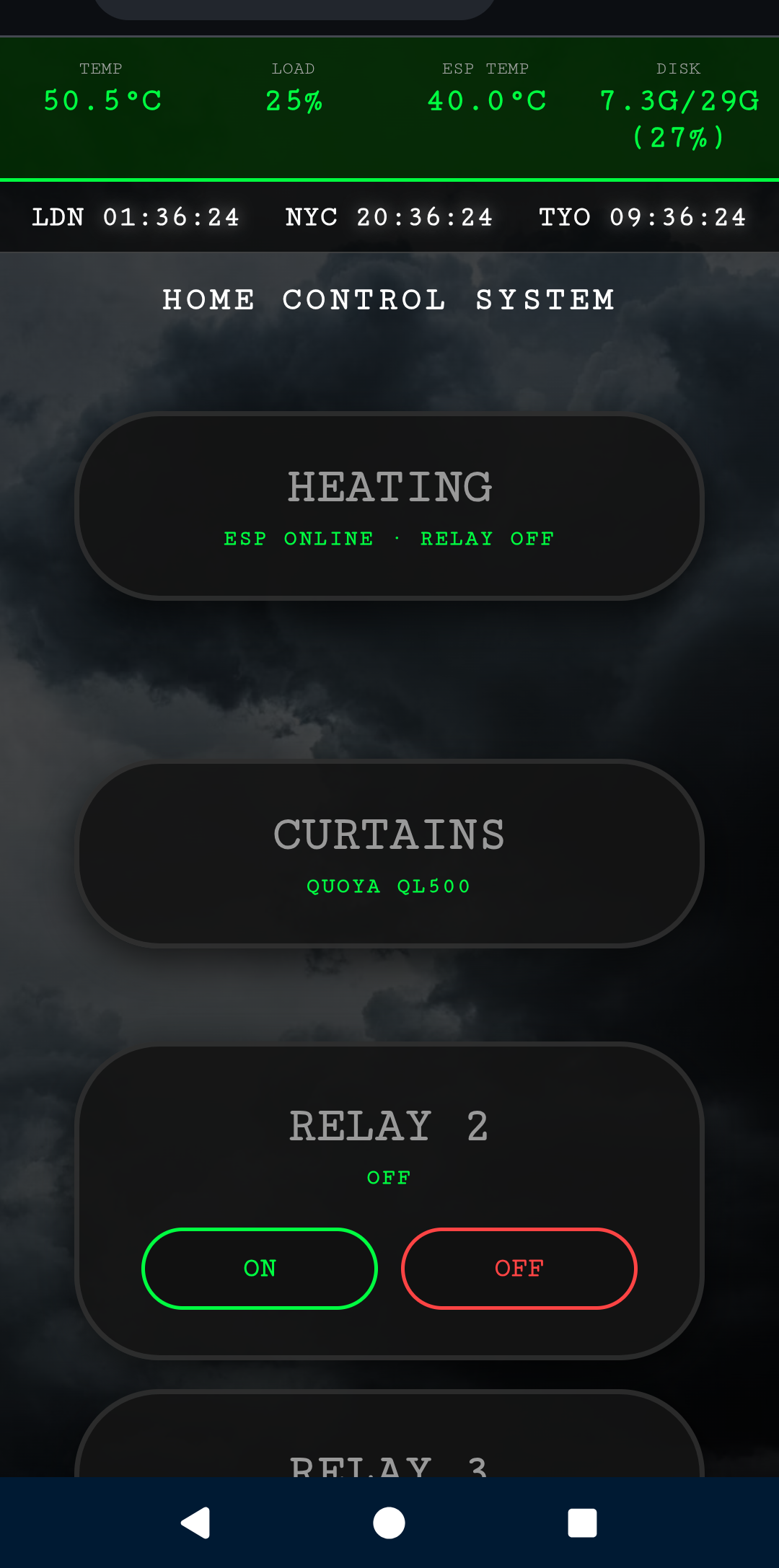
A good example of the sort of system Tech-Yorks can build is a fully local home-control platform combining a Raspberry Pi, ESP32 relay controller and browser-based interface.
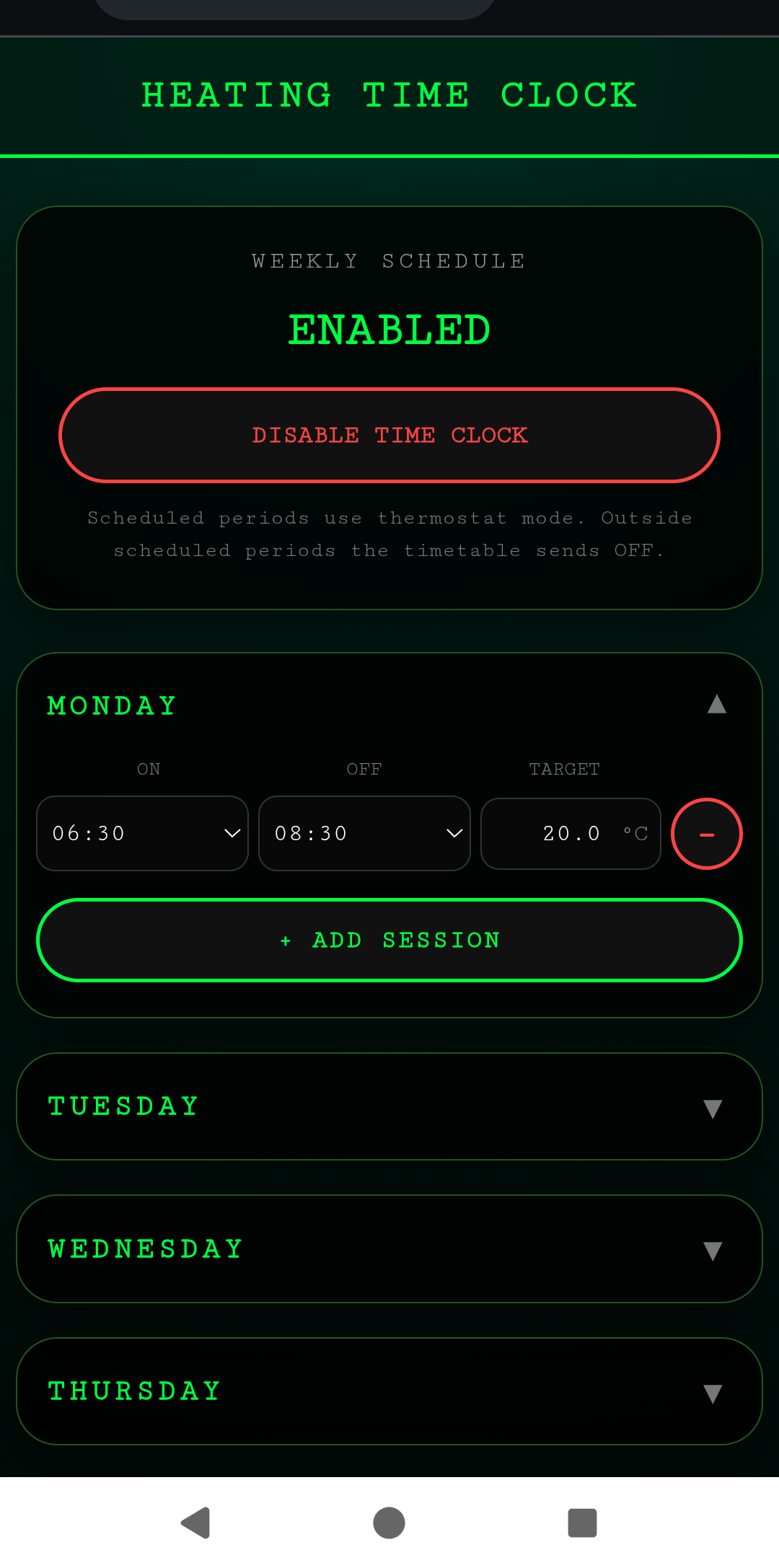
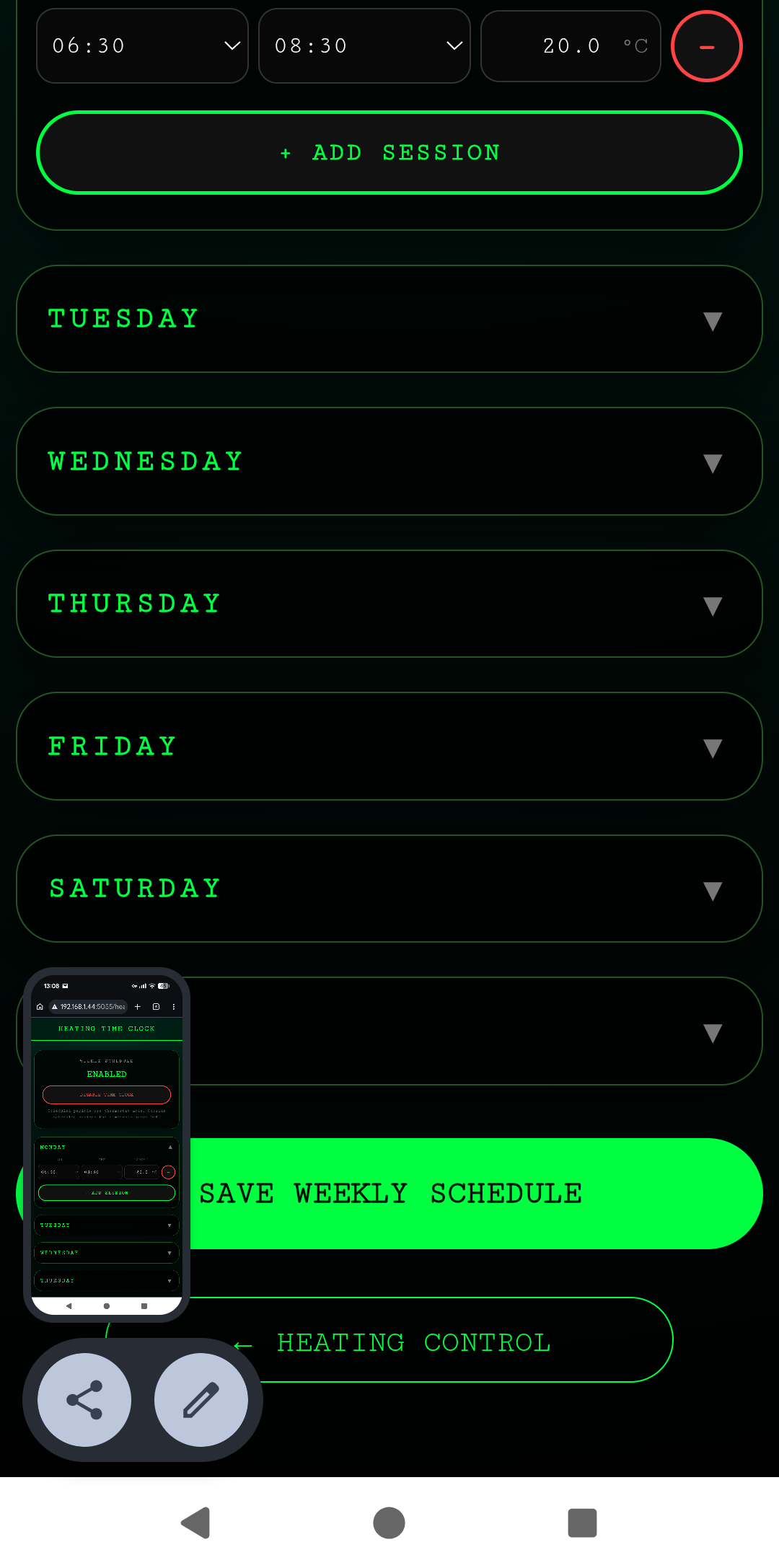
The heating side provides live room-temperature monitoring, thermostat control, timed boost periods and a seven-day time clock with multiple heating sessions and target temperatures.
The same control system can also handle other household functions, including relay-driven devices and powered curtains, so several otherwise unrelated systems can be brought together behind one straightforward web interface.
Remote access is provided securely over Tailscale, allowing the controls to be reached away from home without exposing the web interface directly to the public internet.
The important part is that the core control logic runs locally. There is no requirement for a Hive-style proprietary cloud service to decide whether the heating can be controlled.
LOCAL FIRST
Off-the-shelf smart heating is convenient, but it is not the only option.
Where the job justifies it, a local Raspberry Pi and ESP32 system can offer more flexibility, clearer ownership and far greater control over how the automation actually behaves.
BESPOKE CONTROL IN ACTION
Heating, schedules, relay outputs, curtains and live system information can all be brought together into one local control panel.
SMART HOME & SECURITY
Connected devices still need sensible passwords, updates and network configuration. Cameras, doorbells and remote-control systems deserve particular attention because they often provide access into the home network.
Strong passwords, MFA where available and recovery details that are still valid.
Firmware and app updates matter, particularly for equipment that remains connected continuously.
Where appropriate, smart devices can be separated from more sensitive computers and business equipment.